
American Elderberry
Cultivar Comparison
Sambucus nigra ssp. canadensis
Choosing the right American elderberry cultivar depends on your goals, soil conditions, harvest method, and growing region. Below is a side-by-side comparison of Ranch, Adams, Bob Gordon, Pocahontas, and Wyldewood to help you select the best fit for your planting.
All cultivars listed are adapted to Midwest conditions and suitable for USDA Zones 4–6 (some to Zone 3 depending on cultivar).
Quick Comparison
Ranch | Adams | Wyldewood | Bob Gordon | Pocahontas
Cultivar Profiles
Ranch Elderberry
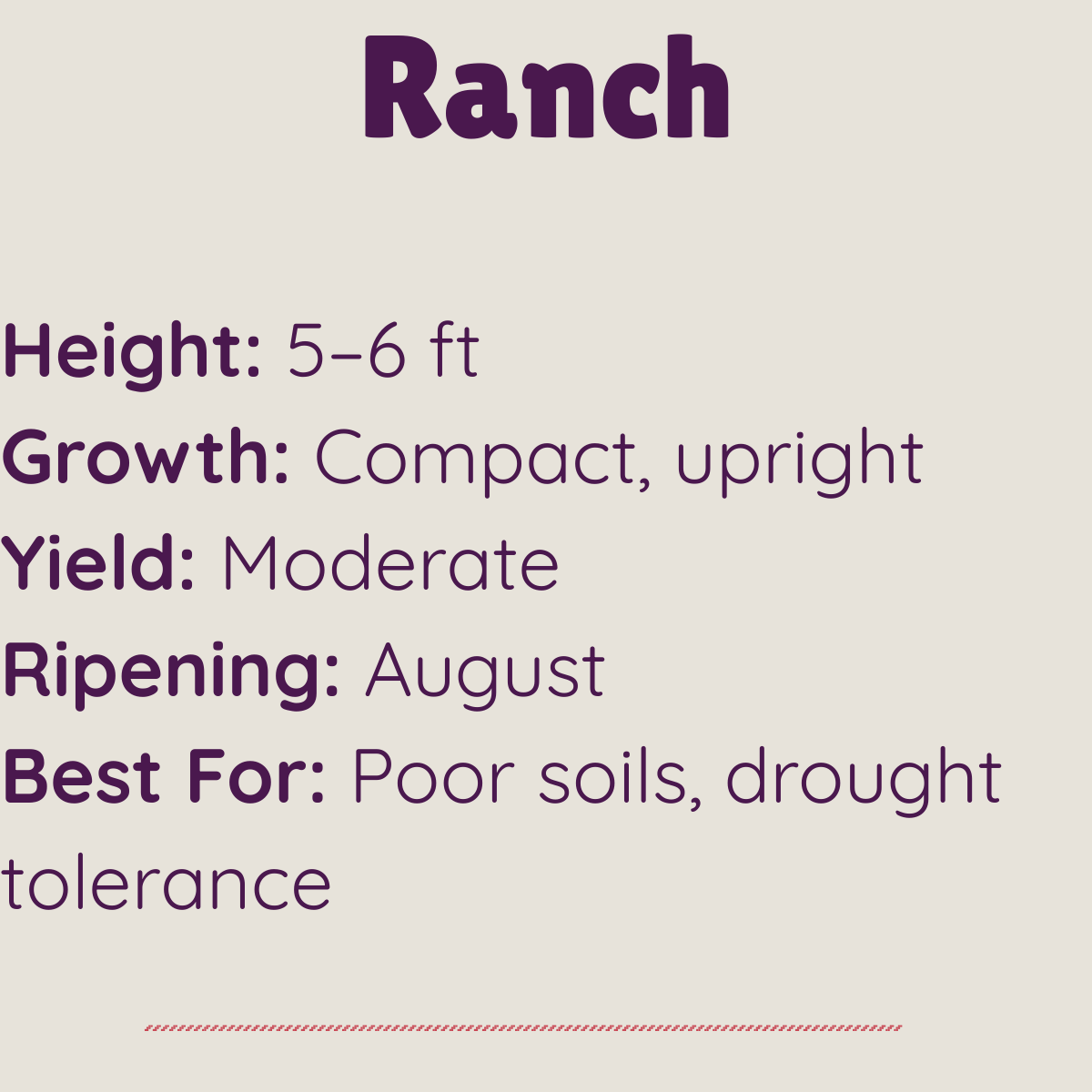
Ranch is a compact, drought-tolerant American elderberry cultivar that performs well in marginal or non-fertile soils. It is one of the most forgiving options for low-input systems and northern climates.
Best choice for:
• Sandy or poor soils
• Smaller spaces
• Resilient, low-maintenance plantings
Adams Elderberry
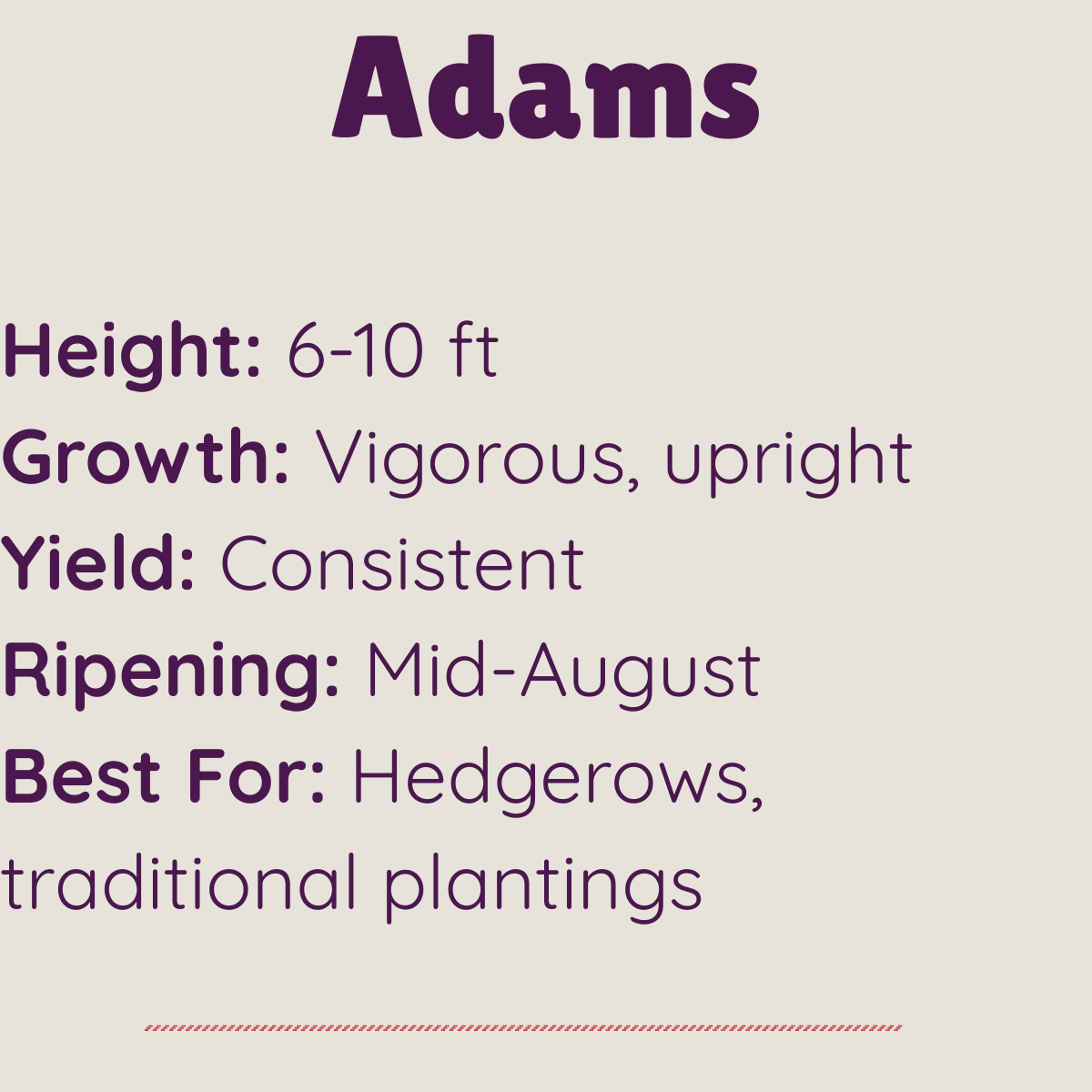
Adams is a traditional and widely planted cultivar known for vigorous growth and reliable fruit production. It performs well in hedgerow-style plantings and backyard gardens.
Best choice for:
• Traditional orchard layouts
• Taller hedgerows
• Growers seeking vigorous growth
Bob Gordon Elderberry
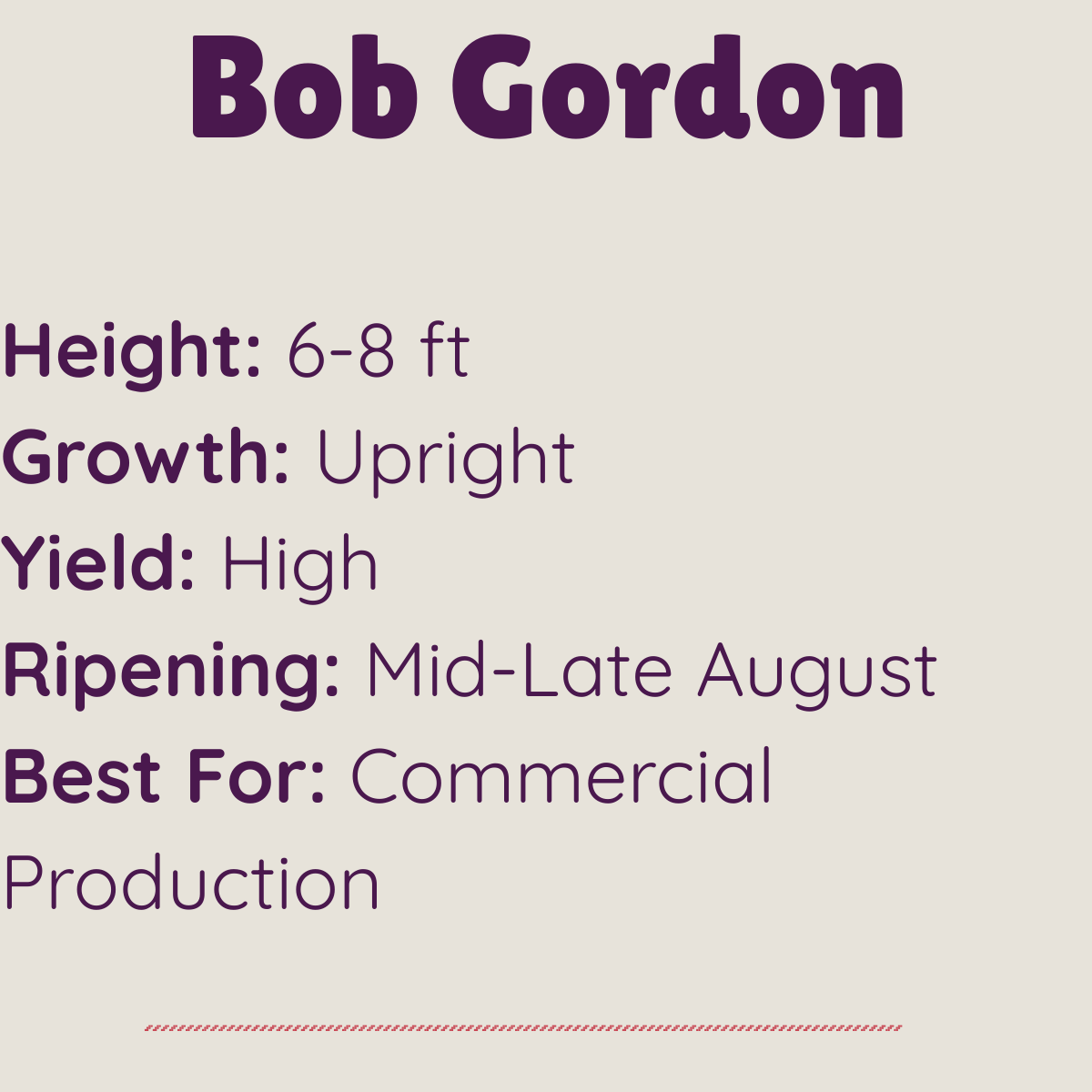
Bob Gordon is favored by commercial growers for its heavy fruit clusters and strong yields. Its ripening window overlaps well with other mid-season cultivars.
Best choice for:
• Commercial production
• High-yield systems
• Processing and value-added production
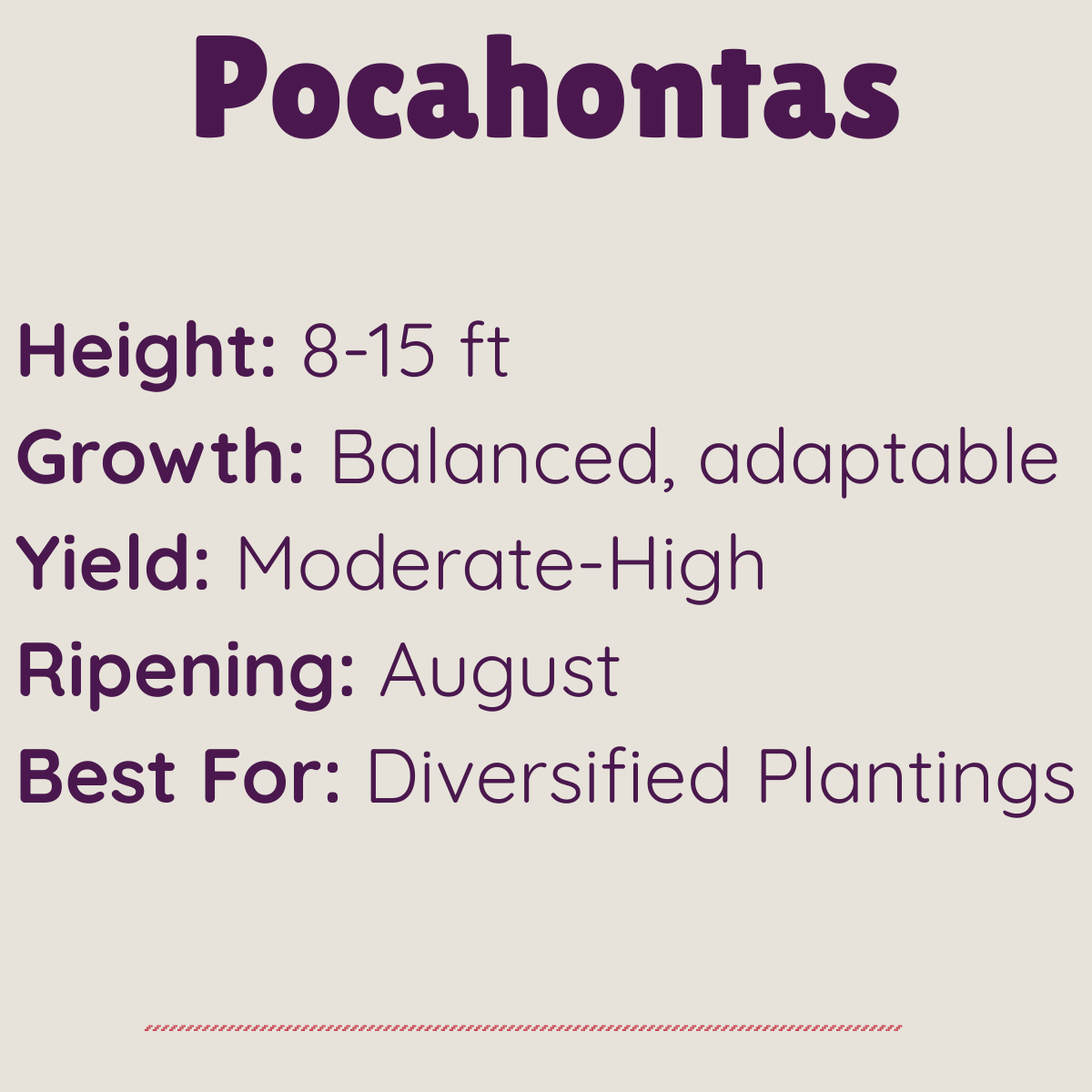
Pocahontas Elderberry
Pocahontas offers balanced growth and adaptability across Midwest conditions. It performs reliably in mixed plantings and diversified orchard systems.
Best choice for:
• Flexible planting systems
• Mixed-cultivar blocks
• Growers seeking adaptability
Wyldewood Elderberry
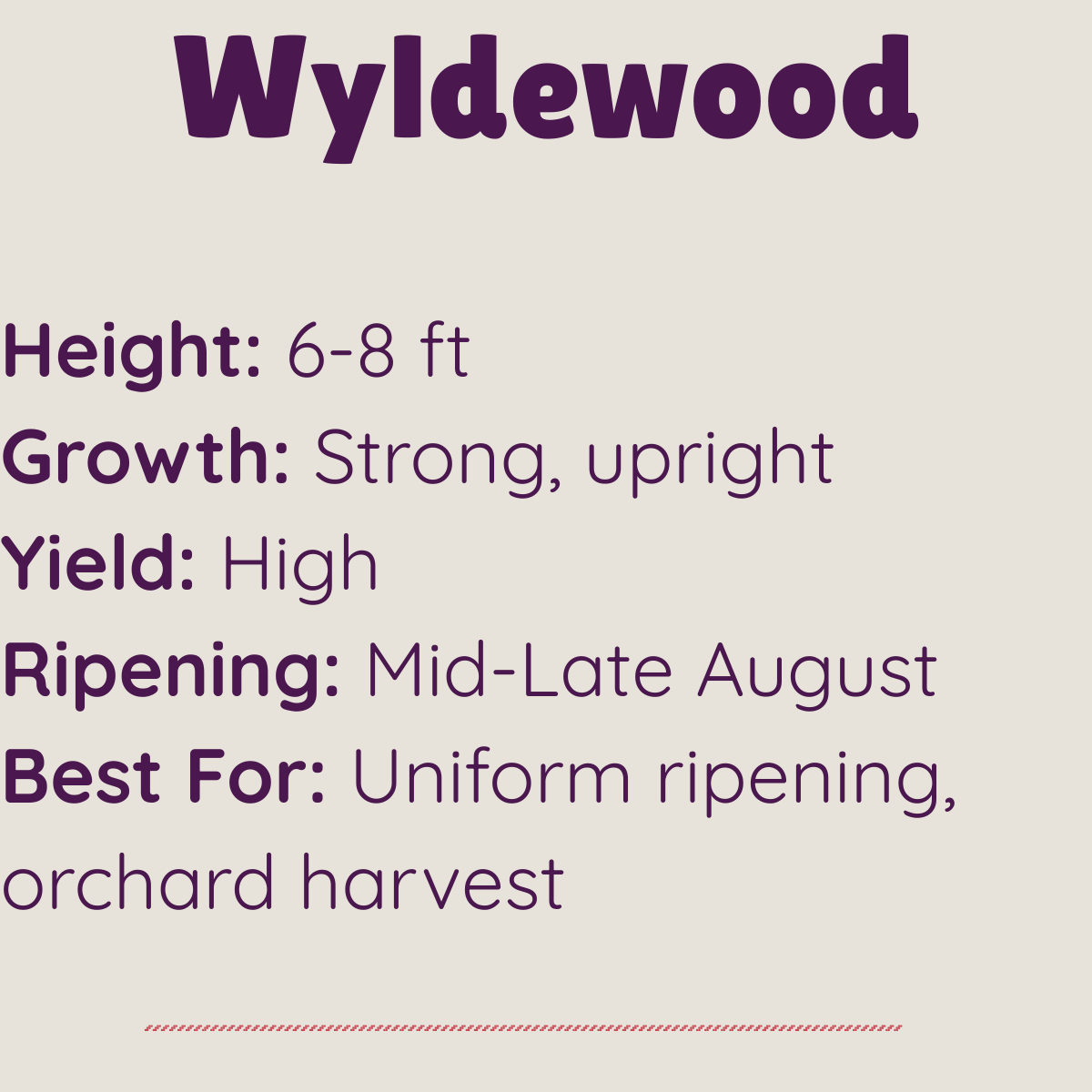
Wyldewood is a high-yielding cultivar known for uniform ripening and consistent harvest timing. It is widely planted for orchard-scale production.
Best choice for:
• Uniform harvest timing
• Mechanical or coordinated harvest
• High-production plantings
Pollination &
Bloom Overlap
American elderberry cultivars (Sambucus nigra ssp. canadensis) produce the highest yields when at least two to three different varieties with overlapping bloom windows are planted within 50–60 feet of each other.
Strong pollination pairings include:
• Wyldewood + Bob Gordon
• Ranch + Adams
• Ranch + Wyldewood
• Adams + Bob Gordon
• Pocahontas + Ranch
• Pocahontas + Wyldewood
Planting multiple American elderberry cultivars improves cross-pollination, increases berry size and cluster fill, and stabilizes production across varying Midwest weather conditions.
Choosing the Best
Elderberry Cultivar
Choose Ranch if you need resilience and drought tolerance.
Choose Adams if you want vigorous traditional growth.
Choose Bob Gordon or Wyldewood for higher commercial yields.
Choose Pocahontas for adaptable, balanced performance in mixed systems.
Many growers plant three or more cultivars to maximize pollination and stagger harvest timing.
Missouri-Grown
Nursery Stock
All cultivars offered are Missouri-grown rooted plants produced through a licensed nursery partnership using regenerative soil practices.
Plants are adapted to Midwest climates and suitable for backyard gardens or commercial orchard establishment.